
How to Choose Products for Dry Skin That Help
Updated: Aug 7
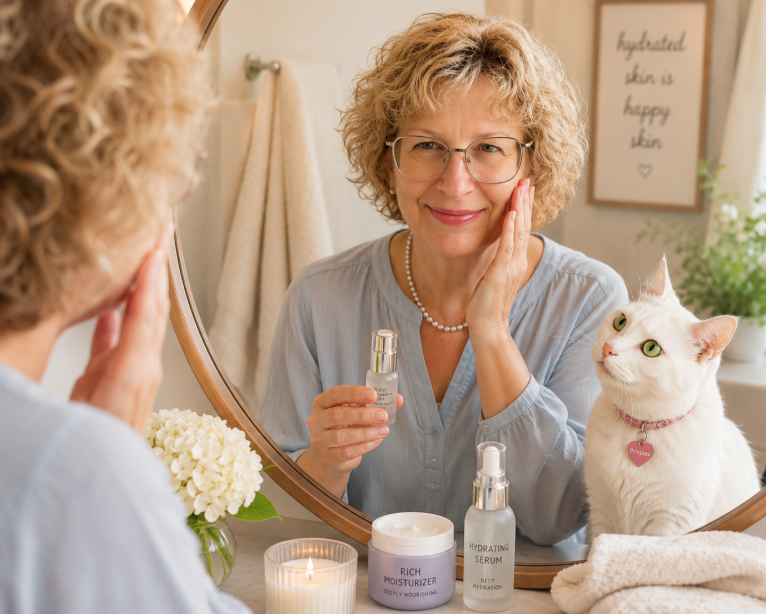
When your face feels tight right after washing, makeup settles into little lines, or your favorite moisturizer suddenly seems to disappear, it’s tempting to buy every product labeled “hydrating.” But learning how to choose products for dry skin is less about buying more and more about selecting a few supportive products that work together.
Dry skin can make your complexion look dull, feel rough, and become more sensitive than usual. It can also change with the seasons, hormones, stress, travel, and age. The good news is that a simple routine can make a meaningful difference. You don’t need a crowded bathroom counter to help your skin feel comfortable again.
Start by Noticing What Your Skin is Telling You
Dry skin isn’t always the same as dehydrated skin. Dry skin doesn’t produce enough of its own natural oil, while dehydrated skin is lacking water. You can have either one, or both. If your skin feels flaky, rough, tight, itchy, or easily irritated, dryness may be part of the picture.
Before choosing a product, consider when the discomfort happens. Is your skin tight only after cleansing? Does it become dry around your cheeks but shiny through your T-zone? Are your hands, neck, and face all dry, or is the issue limited to one area? These little details matter because the best routine is personal, not one-size-fits-all.
Skin can also feel “off” because a product is too strong. A cleanser that leaves your face squeaky clean, a scrub used too often, or several active treatments layered together can leave the skin barrier struggling. In that case, adding a richer cream may help, but simplifying the routine is often just as important.
How to Choose Products for Dry Skin Without Guesswork
Think of your routine in three jobs: cleanse gently, add moisture, and help hold that moisture in. A product doesn’t have to do everything at once, but your routine should cover all three.
Choose a Cleanser That Doesn’t Leave Skin Tight
During menopause, skin can become drier, thinner, and more easily irritated. Cleansing should feel like a refresh—not a complete reset. Look for a gentle, creamy, lotion-like, or hydrating cleanser that removes makeup, sunscreen, and the day’s buildup without leaving your face feeling tight or squeaky-clean.
Ingredients such as glycerin, hyaluronic acid, ceramides, squalane, aloe, and soothing oat ingredients may help support moisture and comfort. Because menopausal skin can also become more sensitive, a fragrance-free cleanser is often a wise choice.
Be cautious with cleansers labeled deep-cleansing, oil-control, clarifying, or extra-purifying when dryness is your main concern. These formulas may be useful for very oily skin, but they can feel too harsh on skin that is already tight, flaky, or easily irritated.
If you wear light makeup or haven’t been sweating heavily, one gentle cleanse in the evening may be enough. In the morning, some women with dry menopausal skin do well with a quick lukewarm-water rinse followed by moisturizer.
One honest caution: if products suddenly sting badly, or there is persistent redness, itching, cracking, or a rash, that may be more than ordinary menopause-related dryness and is worth having checked by a dermatologist.
Look for Moisture-Supporting Ingredients
Ingredient lists can feel intimidating, but you don’t need to memorize everything. Look for familiar moisture-loving ingredients that make sense for dry skin. Helpful categories include:
Humectants, such as glycerin and hyaluronic acid, which draw water toward the skin.
Emollients, such as squalane and certain plant oils, which help skin feel softer and smoother.
Barrier-supporting ingredients, such as ceramides, which help reinforce the skin’s protective outer layer.
Occlusive ingredients, such as petrolatum or dimethicone, which help reduce moisture loss.
You don’t need every one of these ingredients in every product. A serum with humectants followed by a cream with emollients and barrier support can be a lovely combination.
If you prefer fewer steps, a well-formulated moisturizer may be enough. The right answer depends on how dry your skin feels and how much routine you realistically want to keep up with.
Pick a Moisturizer Based on Feel, Not Just the Label
“Moisturizer” is a broad word. A lightweight gel may feel refreshing, but it may not be enough for skin that gets dry by lunchtime. A rich cream may be wonderfully comforting at night, but it might feel too heavy under makeup. That doesn’t mean either product is wrong. It simply means you may need different textures at different times.
For daytime, choose a moisturizer that leaves your skin comfortable without pilling under sunscreen or makeup. At night, you may prefer a creamier formula that gives your skin more cushion. If your cheeks and around-your-mouth area are especially dry, you can apply a little extra there rather than switching your entire routine.
Apply moisturizer while skin is still slightly damp after cleansing. This small habit can help your products work harder without adding another step. Press it in gently instead of rubbing aggressively, especially if your skin feels sensitive.

Effective
A little excitement from a new product can be fun. Burning, stinging, ongoing redness, or increased flaking is not something you need to push through. Dry skin is often more reactive, and products that worked for you years ago may no longer feel good now.
Be thoughtful with strong exfoliants, retinol products, fragranced products, and astringent toners. None of these are automatically off-limits, but timing and frequency matter. For example, a retinol product may be part of an anti-aging routine, yet you may need to use it less often and pair it with a comforting moisturizer. If your skin is actively irritated, it’s usually wise to focus on gentle cleansing and moisture support first.
When trying something new, introduce one product at a time. Give it several days or a couple of weeks, depending on the product, before deciding whether it’s a fit. If you change your cleanser, serum, moisturizer, and exfoliant all at once, it becomes nearly impossible to tell what is helping or hurting.
Build a Routine You Will Actually Use
The most effective dry-skin routine is often wonderfully simple. In the morning, use a gentle cleanse or rinse if needed, apply moisturizer, and finish with broad-spectrum sunscreen. In the evening, cleanse away makeup and sunscreen, then apply a moisture-supporting product and moisturizer.
If your skin still feels dry, consider adding a richer cream at night or a thin layer of a protective ointment just on the driest spots. This can be especially helpful in winter, in dry indoor air, or when you’re using a treatment that makes your skin more sensitive.
It’s also okay to adjust. Your summer routine may need lighter layers, while cold-weather skin may ask for more comfort. Your skin is allowed to change. That’s not a sign you’ve failed at skincare. It’s simply a sign that your routine deserves to change with you.
Remember That Dry Skin Can Need Extra Care
If you have persistent itching, cracking, painful redness, rash-like patches, or dryness that doesn’t improve with gentle products, check in with a dermatologist or healthcare professional. Conditions such as eczema, rosacea, allergies, or certain medications can affect how your skin behaves. Personalized medical guidance is especially valuable when your skin is uncomfortable or inflamed.
For everyday dryness, there’s no prize for having the longest routine or owning the most products. Start with a gentle cleanser, a moisturizer your skin enjoys, and sunscreen you will use consistently. Then pay attention. The goal is not perfect skin. It’s skin that feels calmer, softer, and more like home. And if you’d like a little one-on-one help sorting through your options, Chat with Babs is here to make the process feel simpler, never pressured.
Additional Tips for Maintaining Healthy Skin
Stay Hydrated
Drinking enough water is essential for overall skin health. Hydration starts from within, so make sure you’re sipping enough throughout the day. Aim for at least eight glasses daily, and consider herbal teas or infused water for a fun twist! 🍵
Nourish Your Skin
Incorporate foods rich in omega-3 fatty acids, antioxidants, and vitamins into your diet. Foods like salmon, avocados, nuts, and berries can help support your skin from the inside out. Remember, what you eat can reflect on your skin!
Protect Your Skin
Always wear sunscreen, even on cloudy days. UV rays can still penetrate through clouds and cause skin damage. A broad-spectrum sunscreen with at least SPF 30 is your best friend!
Embrace a Consistent Routine
Consistency is key in skincare. Stick to your routine, and give your products time to work. It may take a few weeks to see noticeable changes, so be patient and kind to yourself.
Experiment and Have Fun
Don’t be afraid to try new products or techniques! Skincare is a journey, and it’s all about finding what works best for you. Enjoy the process, and remember to have fun along the way! 🌟
With these tips, you’ll be well on your way to helping your skin feel more comfortable, nourished, and radiant.


Comments