
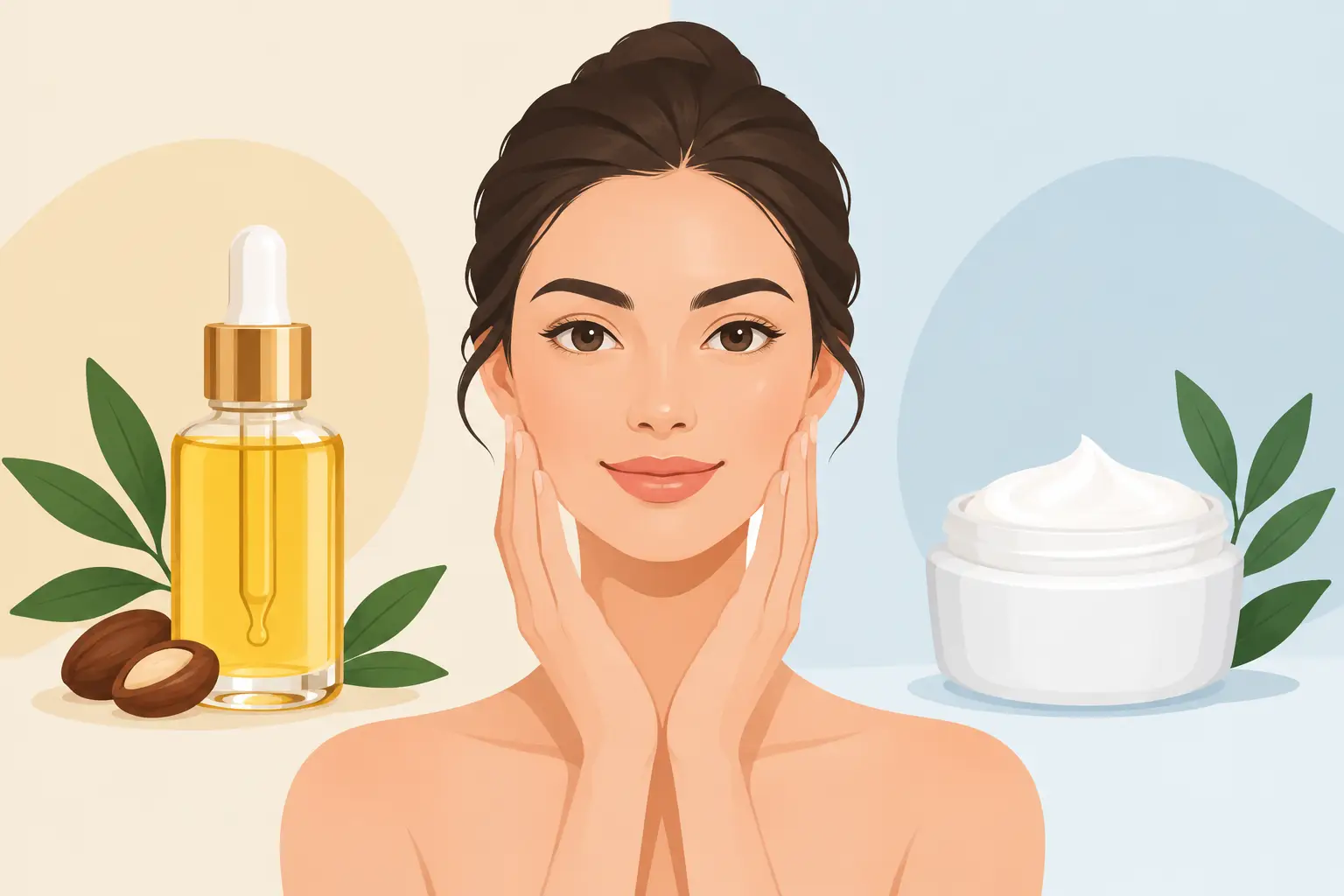
Face Oil vs Moisturizer: What Skin Needs
Your favorite moisturizer suddenly feels like it disappears by lunchtime. Or perhaps you bought a beautiful facial oil, used it faithfully, and still woke up with skin that felt tight. This is where the face oil vs moisturizer question gets confusing, especially as skin becomes drier, more sensitive, or simply different than it used to be.
The good news is that you do not have to choose a side. Face oil and moisturizer can both have a place in a routine, but they do different jobs. Once you understand that difference, you can stop guessing and give your skin the comfort it has been asking for.
Face Oil vs Moisturizer: The Real Difference
Think of moisturizer as your skin's drink of water and support system. A well-made moisturizer is usually designed to add hydration, soften roughness, and help hold water in the skin. Many creams and lotions contain a mix of water-loving ingredients, skin-softening ingredients, and protective ingredients that reduce moisture loss.
Face oil is mostly about softness and sealing. Oils are rich in lipids, which can help support the skin's natural barrier and leave it feeling supple. They are especially lovely when skin feels dry, flaky, or less comfortable than it once did. But oil does not add water to the skin in the same way a moisturizer can.
That distinction matters. If your skin is dehydrated, meaning it lacks water, applying only oil may make it feel smoother for a little while without fully addressing the tightness underneath. If your skin is dry, meaning it does not produce enough of its own natural oils, a facial oil may feel like a wonderful extra layer of comfort.
Most women with changing skin do best when they think of oil as a helpful partner to moisturizer, not an automatic replacement for it.
What Moisturizer Does for Changing Skin
As we age, skin often makes less oil and may not hold onto moisture as easily. Indoor heat, air conditioning, hot showers, stress, travel, and seasonal weather can make that feeling even more noticeable. Fine lines can look more visible when skin is thirsty, and makeup may settle differently on dry patches.
A moisturizer helps by giving skin hydration and creating a more comfortable surface. It can make skin feel cushioned rather than papery. Depending on the formula, it may also include ingredients that support a smoother-looking texture and a healthier skin barrier.
You do not need a complicated cream cabinet. What matters is finding a moisturizer that feels good on your skin and that you will actually use consistently. If your face feels tight after cleansing, looks dull, or absorbs moisturizer almost immediately, you may benefit from a richer formula than the one you are using now.
In the morning, moisturizer also helps create a comfortable base under makeup and sunscreen. At night, it supports skin while you rest and recover from the day.
What Face Oil Can Add
A face oil can be a beautiful finishing touch, particularly for dry or mature-looking skin. It can soften the feel of rough areas, give the complexion a gentle glow, and help reduce that uncomfortable, stretched feeling that shows up when the weather turns cold.
It is also wonderfully flexible. You may not need it every day or all over your face. Some women use one or two drops at night only. Others press a small amount onto their cheeks, around the mouth, or over areas that tend to look dry. If your foundation has started to look flat or clingy, a tiny amount of oil mixed carefully with moisturizer can sometimes help, though more is not always better.
The trade-off is that oils can feel too rich for some skin types, especially if you are prone to clogged pores or breakouts. An oil can also make makeup slip if you apply too much in the morning. That does not mean facial oil is off-limits. It simply means your amount, timing, and formula matter.
Do You Need Both?
Not necessarily. Your skin does not earn extra credit for having more steps. If a moisturizer alone leaves your face soft, comfortable, and calm from morning until night, that may be all you need.
You may want both if your skin still feels dry after moisturizer, if you see flaking around the nose or mouth, or if your skin seems to crave more comfort during colder months. In that case, moisturizer gives your skin hydration, while a small amount of oil can help lock in that comfort.
You may prefer moisturizer without oil if your skin gets shiny quickly, breaks out easily, or feels heavy under richer products. A lightweight moisturizer can still be deeply supportive without leaving a greasy finish.
Your skin can also change from season to season. The routine that feels perfect in July may not be enough in January. There is nothing wrong with adjusting as your skin gives you new information.
How to Layer Face Oil and Moisturizer
If you are using both, begin with clean skin. Apply any lightweight treatment product first, then your moisturizer. Press a few drops of face oil over the top, focusing on the places that feel driest.
The simple order is water-based products first, then cream, then oil. Oil tends to form a more protective layer, so putting it on last often makes the most sense.
In the morning, finish with sunscreen. Sunscreen should be the last skincare step before makeup so it can form an even protective layer on your skin. If oil makes your sunscreen or makeup move around, save your facial oil for nighttime instead.
You can also mix one small drop of oil into your moisturizer in your palm when your skin needs a little extra comfort. This is an easy option for women who do not enjoy layering several products. Start small. You can always add another drop tomorrow, but it is hard to undo a face that feels overly slippery today.
Signs Your Routine Needs a Small Adjustment
Your skin is always communicating, even when it is not doing so politely. Tightness, flaking, stinging, extra shine, and little bumps are all clues worth paying attention to.
If your skin feels tight but looks oily, it may be dehydrated rather than in need of more oil. Try a gentle moisturizer consistently before adding a heavier facial oil. If your skin feels dry, dull, and rough even after moisturizer, adding a little oil at night may help.
If you notice new breakouts or congestion after starting an oil, pause it for a week or two. Your skin may prefer a lighter texture, a smaller amount, or oil only on dry areas. And if a product stings, burns, or causes a rash, stop using it. Comfort should never be something you have to push through.
Be patient with new products, too. Give your skin a little time to respond, but do not introduce several new things at once. When everything changes at the same time, it becomes nearly impossible to know what is helping and what is not.
Keep It Simple and Personal
The best answer to face oil vs moisturizer is not a trendy rule. It is a routine that leaves your skin feeling comfortable, cared for, and like itself. For many women, that starts with a gentle cleanser, a moisturizer that fits their skin, daily sunscreen, and perhaps a facial oil when dryness calls for extra support.
If you are standing at the bathroom counter wondering what your skin needs, start with moisturizer. Then listen. If your skin still feels dry and asks for more, try a small amount of oil at night. There is no pressure to get it perfect on the first try. A few thoughtful adjustments can make skincare feel simple again, and you deserve to feel good in your skin.


Comments